
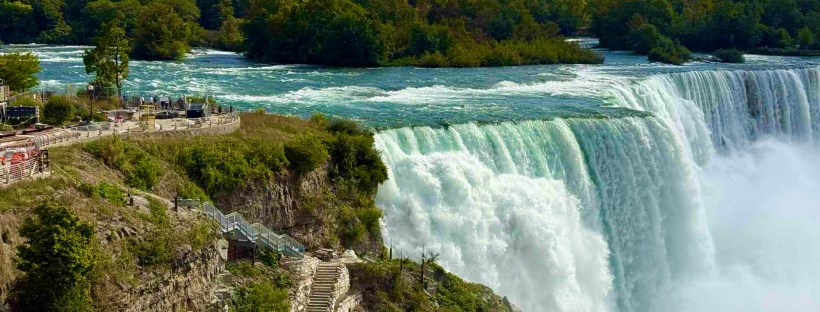
The American side of Niagara Falls is a bit like an old celebrity. In its heyday, Niagara was the de-facto destination for everyone from the honeymooning couple from Kansas to the President of the United States. Of course, times and tastes change, and the mighty Falls of Niagara slowly fell out of favor for more exotic locales.
At the same time, the primary economy of Niagara, industry, has suffered the fate of most industrial towns along the Rust Belt. Dozens of shuttered factories pepper the city, leaving a population of workers on a decades-long exodus for blue-collar jobs.
Although the Canadian side of the Falls has long been touted as the superior destination, strong efforts by groups like the Niagara Falls National Heritage Area, and the county’s Destination Management Organization Niagara Falls USA have worked solidly over the last several years to bring the American side into the spotlight. This comes at a time when travelers more than ever are searching for natural, authentic experiences; something that the at times cloyingly-touristy Canadian side fails to capture.
The result is a strange dichotomy. Niagara Falls, NY is seeing a surge in development and revitalization at a volume not seen in years, but in-market buzz about these projects is nearly nonexistent. In fact, there has been more coverage as of late on development outside of the Cataract City in neighboring municipalities like North Tonawanda and Lockport, leaving the community here in the Falls in the dark.
Niagara’s behind-the-scenes comeback
To call the Cataract City’s comeback “behind-the-scenes” is probably incorrect. Rather publicly, Niagara Falls, New York is at least on a rebound from the lows of the pandemic. Visitor spending in 2024 reached an astounding $1.163 billion, up 4.3% from 2023. A new $49 million welcome center opened in the State Park in 2024 as well, and the Crow’s Nest alongside the Maid of the Mist is receiving a $9 million rebuild and extension, set to be finished in 2026.
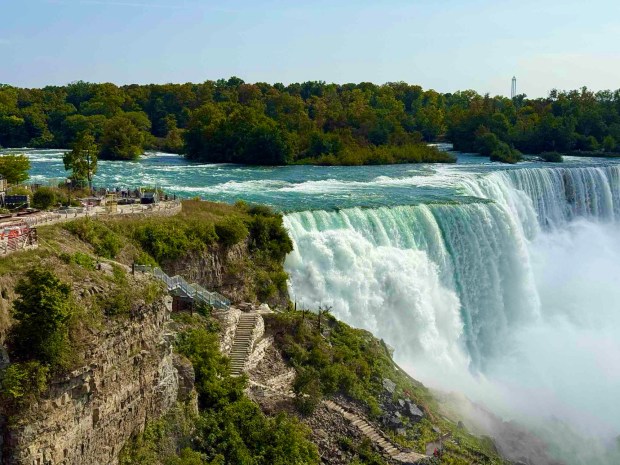
The Aquarium of Niagara recently expanded into the former Gorge Discovery Center, opening Great Lakes 360. This coincides with recent improvements to their entry plaza, interior exhibits, and planned upgrades to their Seal Harbor area.
Inside the downtown core, two different parks are being built to expand access between the City core and the State parkland. The Gorge Gateway Park is set to be a mixed-use recreational space for smaller events and concerts, while the Hydraulic Power is being designed to not only highlight the Falls’ rich hydroelectric history, but also serve as an ice skating rink in winter months.
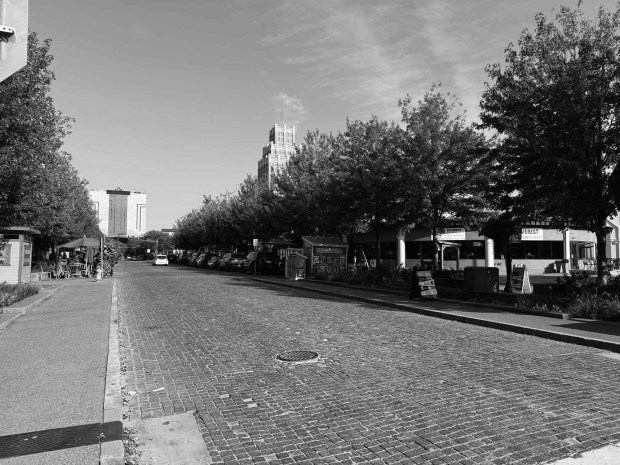
Old Falls Street is being completely restructured, with the the rusting remnants of Falls Street Faire having been demolished to make way for a mixed-use apartment and commercial building on First Street. The Pointe, having been mostly vacant for over a decade, is now fully-occupied with a flagship Magic Theatre, retail, and an entire strip of restaurants and food trucks (primarily catering to Niagara’s top demographic of visitors from the Indian Subcontinent). The opposite side of the block features the city’s first Church’s Chicken, and a slew of new chain restaurants are being completed to make Old Falls Street the de-factor “tourist food” strip.
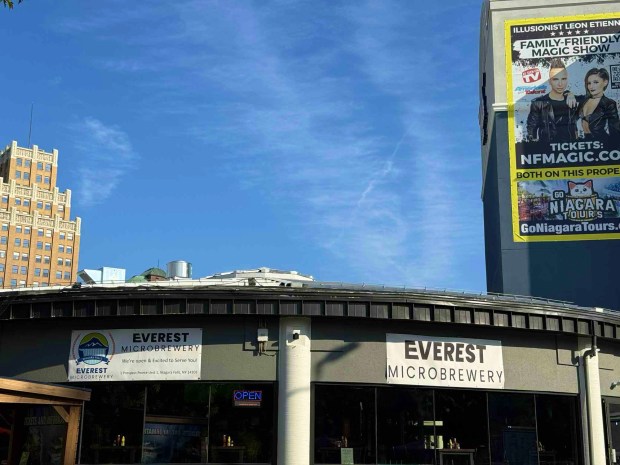
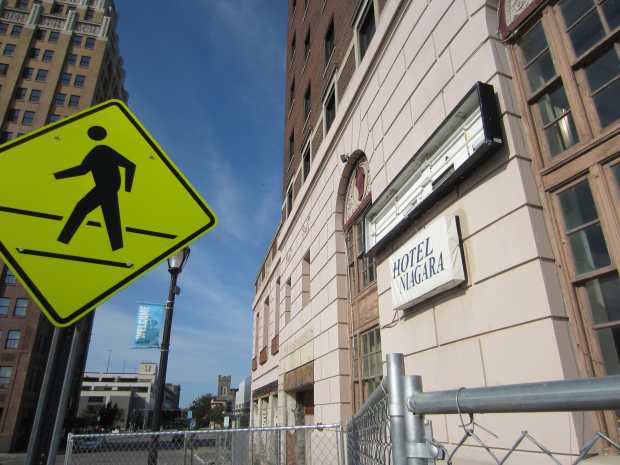
In the world of lodging, the Hotel Niagara is back on track with its restoration, having been stalled by the financial aftermath of the pandemic. This comes on the heels of the opening of the Cambria hotel last year only a few blocks from the historic Art Deco hotel.
Away from downtown, the City government has taken control of much of Main Street, attempting to force development of 39 derelict properties that were being held in speculative purgatory. This has already led to developers being announced for the first four of these properties, the most buzzworthy being the former Jenss Department Store. The National Heritage Area fully restored the Prophet Isaiah Second Coming House on Ontario Avenue, and is offering tours of the site. Even on Pine Avenue, the City Market is making progress on executing a $20 million overhaul of the space, including building a year-round enclosed market. In the center of the city, Hyde Park is seeing continued improvements. Sal Maglie Stadium has taken great advantage of its $1.4 million facelift, with several baseball teams calling the field their home. The park itself is seeing shoreline improvements along Hyde Park Lake and Gill Creek, and new picnic pavilions.
Throughout the city, major investments and projects are springing up as the result of years of planning, negotiation, and concerted efforts to revitalize Niagara Falls. This appears to be a rebound not just from a gutting pandemic, but from decades of economic hardships for the Cataract City.
With a clear (and apparently public) flurry of development, why is it that Niagara’s rebound is so quiet?
Niagara’s toxic relationship with pessimism
Like any aging starlet, Niagara seems to have frequent run-ins with gossip. The city’s flagship paper, the Niagara Gazette, often runs articles with an almost apathetic tone. Meanwhile, the tabloid of the city, the Niagara Reporter, continues its decades-long tradition of pointing out every city misstep (whether perceived or real) with the intensity of a Hollywood rag trying to take down a washed-up Pop Star.
In the social media sphere, there is a distinct overplaying of the misery of Niagara Falls. The Niagara Express and Niagara Action, both news commentary aggregate blogs, have taken lately to comparing the recent successes of our neighbors in North Tonawanda to the “lack” of development in the Falls.
This pessimism usually comes from one of two spheres. From a political sphere, amplifying shortcomings or failures is a tool as old as politics itself. Even here in the Falls, this method of rhetorical pessimism has shaped the city for decades. The bleak exodus of industry post-Schoellkopf collapse led to a groundswell of support for E. Dent Lackey and his Urban Renewal programs. When local, national & global factors continued to strain the Cataract City, Lackey and Urban Renewal became the scapegoat for everything wrong with the city (even with recognizable Urban Renewal projects like the Convention Center and the Wintergarden being beloved staples of the city in the 70s, 80s & 90s). It’s common to see current leaders place blame on their predecessors, while those looking to fulfill their own political agendas swing at the rhetorically-monolithic “City Hall” to leverage citizens’ favor.
The second sphere, one that is far more relevant to the average resident, is defensive pessimism. Niagara Falls has a history of unfinished or underwhelming developments, and more than once the citizens have been promised the carrot while receiving the stick. This inevitably leads to a population that proactively assumes certain doom: it is less painful to expect failure than to suffer the pain of unending hope.
These two spheres act as a deceptively toxic codependency. Political agendas by their very nature require the community to agree (or at the very least submit) to their rhetoric in order to come to fruition. Meanwhile, defensive pessimism allows the same community to use the political rhetoric as a hall-pass: there is no need to participate in revitalization if it is doomed to fail.
A Bubbling Optimism
Against the current of this long-held pessimism, a small bloom of optimism is budding in the Cataract City. A decade’s worth of effort from the previously-mentioned Niagara Falls National Heritage Area shows that a combination of long and short-term projects can have a lasting impact on the city. The Niagara Beautification Commission, which has existed here since 1978, has been a pool of volunteers and resources for many of the landscape improvements that residents wouldn’t necessarily notice unless they disappeared. There are active grant programs from the State for business improvements both in the downtown core and the larger city, while Niagara County offers grants for everything from landscape improvements and facade work to new business startups (buttressed by a rotation of grants available directly through City Hall).
A surprisingly overlooked boon to the city is the dramatic improvements in education. By shifting to a more dynamic approach, including vocational and trade-based training, Niagara Falls High School’s graduation rate rose from 67% in 2019 to 85.5% in 2023. This year, the school district announced its partnership with Say Yes Buffalo, which will bolster resources for students both in-school and at home. This increased focus on both technology and trade places the Cataract City’s graduates in a fantastic position to take advantage of the growing opportunities in the the IT field, as well as to fill the vacancies in the industrial and trade sectors caused by the Great Retirement Boom.
Of course, eventually the pot has to bubble over. In the process of writing this article, the announcement of the developers on Main Street broke. The overwhelmingly positive response from locals, the media, and public officials almost came as a shock. Is Niagara finally willing to put aside over 50 years of bad habits and actually be optimistic? Only time will tell.
What would you like to see us talk about next? Leave a comment down below. Don’t forget to subscribe to the blog via email to stay up-to-date with this little slice of live in Niagara Falls, NY.
-Sheepie ❤
 Sheepie Niagara